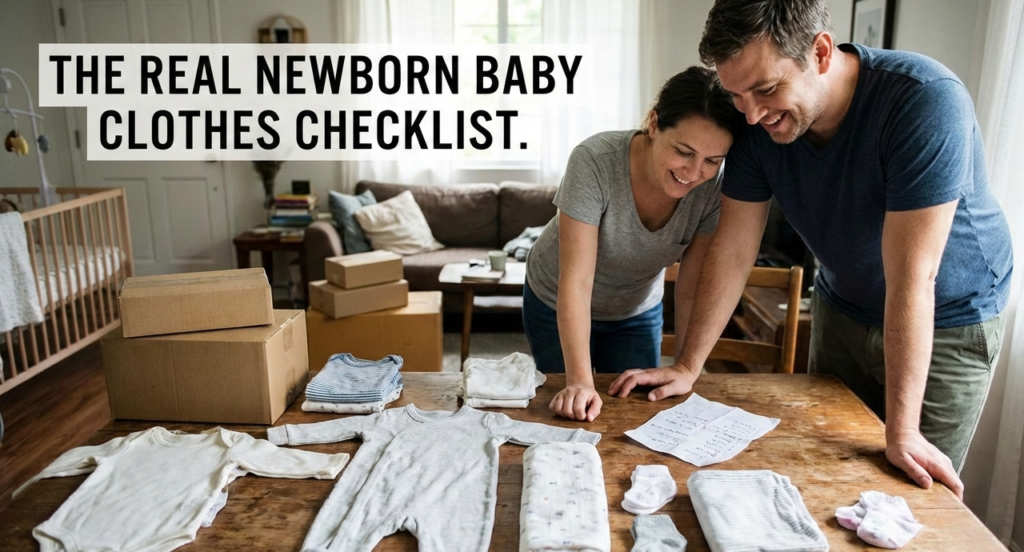
If you’re a first-time parent staring at baby registry lists that suggest 47 onesies in various patterns, you’re probably wondering: Do I really need all this stuff?
Short answer: No.
Long answer: Let me walk you through what your newborn actually needs to wear in those first 30 days, based on comfort, skin safety, and practicality, not what looks cute on Instagram.
The Real Priority: Comfort Over Cute
Here’s the thing about newborns: they don’t care if their outfit matches. They care about being warm enough (but not too warm), having soft fabric against their brand-new skin, and not being wrestled into complicated clothing during diaper changes that happen every 2 hours.
Your baby’s skin is thinner and more sensitive than yours. According to dermatological research, newborn skin is about 40-60% thinner than adult skin and has a higher pH level, making it more vulnerable to irritation and moisture loss. This means fabric choice matters way more than you’d think.
The Minimalist Newborn Wardrobe: What You Actually Need
Let’s break down the essentials by category, with real numbers that make sense.
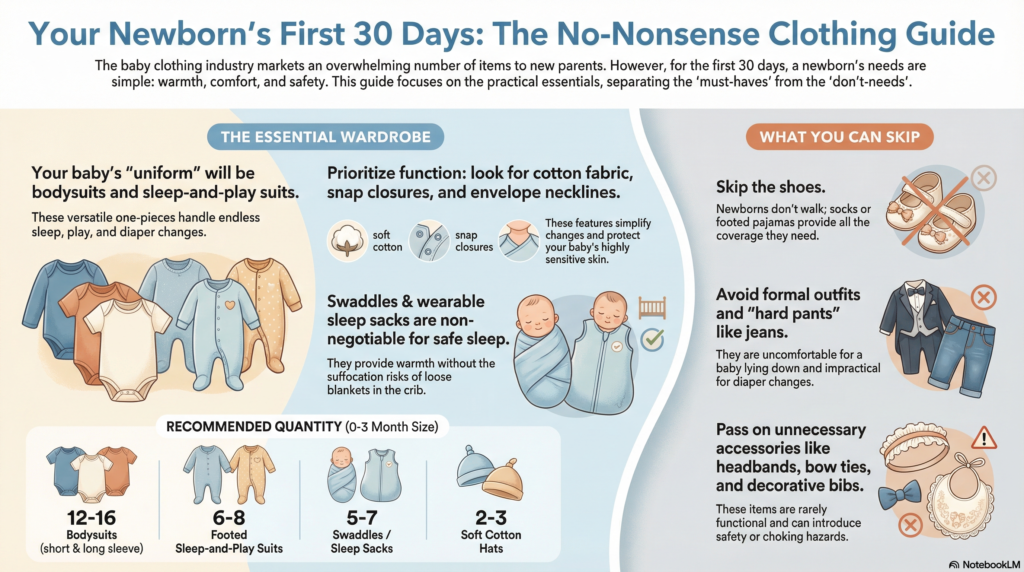
Bodysuits (Onesies): Your Foundation Layer
How many: 6-8 short-sleeve or kimono-style bodysuits
Why this number: You’ll go through 2-3 per day on average due to diaper blowouts, spit-up, and general baby messiness. Having 6-8 gives you enough to rotate while doing laundry every 2-3 days without constantly running the washing machine.
What to look for:
- 100% cotton or bamboo fabric (soft, breathable, gentle on sensitive skin)
- Kimono or side-snap styles for the first few weeks (pulling things over a newborn’s wobbly head is stressful for everyone involved)
- No rough tags or interior seams that sit against skin
The American Academy of Pediatrics emphasizes that newborns should wear breathable fabrics to help regulate body temperature, since they can’t do this efficiently on their own yet.
Sleepers and Pajamas: For Day and Night
How many: 4-6 footed sleepers or gowns
Why these work: Newborns basically live in sleepwear for the first month. Footed sleepers eliminate the need for separate socks (which babies have a magical ability to kick off), and sleep gowns with elastic bottoms make nighttime diaper changes faster.
Pro tip:
Choose sleepers with zippers instead of snaps. At 3 a.m., when you’re half-asleep and your baby is screaming, you don’t want to deal with 15 tiny snaps in the dark. Trust me on this one.
Pants and Separates: Optional But Handy
How many: 2-3 pairs of soft pants
Reality check: You don’t need many of these. Most parents find that bodysuits plus sleepers cover 90% of their needs. But having a couple of pairs of soft cotton pants can be useful when you want to layer or if your baby runs warm and doesn’t need full sleepers.
Outerwear: Season-Dependent
This is where it gets specific to when your baby is born.
For cold-weather babies (born November-March):
- 1-2 fleece or cotton bunting suits for outdoor trips
- 2-3 long-sleeve bodysuits
- 1 lightweight hat (hospitals usually give you one)
- 1 warmer hat for outdoor use
For warm-weather babies (born April-October):
- 4-6 short-sleeve bodysuits
- 1-2 lightweight long-sleeve options for air-conditioned spaces
- 1 sun hat with a brim
The general rule pediatricians use: dress your baby in one more layer than you’re wearing. If you’re comfortable in a t-shirt, your baby needs a t-shirt plus one light layer.
The Accessories Question: What You Need (and What You Don’t)
Actually useful:
- 4-6 pairs of socks or booties (because they will lose them)
- 2 hats (one for indoors, one for outdoors if cold weather)
- 2-3 swaddle blankets or sleep sacks (if you’re swaddling)
Not necessary in the first month:
- Shoes (their feet aren’t touching the ground, and shoes can restrict natural foot development)
- Headbands and bows (cute, but unnecessary and potentially uncomfortable)
- Mittens (unless your baby has sharp nails that keep scratching their face despite your best trimming efforts)
Fabric Matters More Than You Think
Let’s talk about why I keep mentioning fabric types.
Cotton: The gold standard for newborn clothing. It’s soft, breathable, absorbent, and gets softer with each wash. Organic cotton is even better because it’s grown without harsh chemicals that might irritate sensitive skin.
Bamboo: Increasingly popular and for good reason. Bamboo fabric is naturally hypoallergenic, moisture-wicking, and temperature-regulating. It’s slightly more expensive but many parents swear by it for babies with sensitive skin or eczema.
Synthetic fabrics: Generally not recommended for newborns. Polyester and synthetic blends don’t breathe as well, can trap heat, and may contain chemicals that irritate delicate skin. Save these for when they’re older.
Research published in the journal Pediatric Dermatology found that babies dressed in 100% cotton had significantly fewer incidences of heat rash and skin irritation compared to those in synthetic or blended fabrics.
The Sizing Situation: Why You Should Skip Newborn Size
Here’s something that surprises new parents: most babies outgrow “newborn” size clothing within 2-4 weeks. The average newborn weighs 7.5 pounds at birth, and babies typically gain 5-7 ounces per week in the first month.
Better strategy:
Buy mostly 0-3 month sizes. Yes, they’ll be a bit big initially, but they’ll fit within a couple of weeks and last you through month three. Having slightly loose clothes is actually better for comfort and diaper changes anyway.
Exception: If you know your baby will be small (under 6 pounds) or premature, then having a few newborn-sized items makes sense.
The Washing and Prep Situation
Before your baby wears anything, wash it. New clothes can contain manufacturing residues, dyes, and chemicals that shouldn’t touch newborn skin.
Pre-baby washing tips:
- Use a gentle, fragrance-free detergent designed for babies
- Wash everything 1-2 times before the baby arrives
- Skip fabric softener (it can irritate skin and reduce fabric absorbency)
- Dry on low heat or air dry to maintain softness
The American Academy of Dermatology recommends hypoallergenic, dye-free, and fragrance-free detergents for infants, especially those with sensitive skin or a family history of eczema.
Real Talk: What Parents Actually Regret Buying
I looked at forums, parent groups, and surveys to see what people wish they hadn’t bought:
Top regrets:
- Too many newborn-sized clothes (they grow so fast)
- Outfits with complicated buttons, ties, or closures
- Clothes that require hand-washing or special care (you won’t have time)
- Anything white (stains are inevitable and you’ll stress about keeping them pristine)
- Dress-up outfits for a baby who lives in their bassinet
One mom from a Reddit parenting forum put it perfectly: “I received 14 different ‘coming home from the hospital’ outfits. My daughter wore one for approximately 45 minutes and threw up on it in the car. The rest sat in her closet with tags on until she outgrew them.”
Special Considerations: Skin Conditions and Sensitivities
About 20% of babies develop some form of eczema or skin sensitivity in their first few months. If your baby has sensitive skin or you have a family history of eczema or allergies, take extra care with clothing choices.
For sensitive skin:
- Choose certified organic cotton when possible
- Look for clothes with flat seams or seams on the outside
- Avoid anything with embellishments, rough patches, or appliqués
- Stick to light colors (darker dyes can be more irritating)
- Turn clothes inside out if seams seem to bother the baby
If you notice persistent rashes, red patches, or skin irritation, talk to your pediatrician. Sometimes it’s the clothing, sometimes it’s the detergent, and sometimes it’s something else entirely.
The Money Breakdown: What This Actually Costs
Let’s put some real numbers to this minimalist wardrobe.
Budget-friendly option (Target, Old Navy, Carter’s):
- 8 bodysuits @ $3-5 each = $24-40
- 5 sleepers @ $6-10 each = $30-50
- 3 pairs of pants @ $5-8 each = $15-24
- 6 pairs of socks @ $1-2 each = $6-12
- 2 hats @ $4-6 each = $8-12
Total: $83-138
Mid-range option (Primary, Burt’s Bees Baby, H&M):
- 8 bodysuits @ $6-9 each = $48-72
- 5 sleepers @ $12-18 each = $60-90
- 3 pairs of pants @ $10-14 each = $30-42
- 6 pairs of socks @ $3-4 each = $18-24
- 2 hats @ $8-12 each = $16-24
Total: $172-252
Premium option (Hanna Andersson, Colored Organics, Little Sleepies):
- 8 bodysuits @ $12-18 each = $96-144
- 5 sleepers @ $24-35 each = $120-175
- 3 pairs of pants @ $18-24 each = $54-72
- 6 pairs of socks @ $5-8 each = $30-48
- 2 hats @ $14-20 each = $28-40
Total: $328-479
Most parents find that mixing categories works well: splurge on sleepers (since baby lives in them) and go budget-friendly on bodysuits (since they get stained anyway).
The Hand-Me-Down and Gift Reality
Here’s what usually happens: people will give you baby clothes. Lots of them. Some will be perfect, some will be sized wrong, and some will be adorable but completely impractical.
How to handle this diplomatically:
- Accept gifts graciously
- Wash everything before deciding what to keep
- Try things on baby or hold them up to assess fit
- Keep what works, donate or save what doesn’t
- Don’t feel guilty about not using every single gift
If people ask what you need, be specific: “We could use 0-3 month sleepers with zippers” is way more helpful than a general registry link.
What About Special Occasions?
In the first 30 days, you probably won’t have many “dress up” occasions. Even if you do, babies look adorable in a clean sleeper. You don’t need a special outfit for every visitor or photo op.
When you might want a nicer outfit:
- Professional newborn photos (if you’ve scheduled them)
- Religious ceremonies or cultural traditions
- Coming home from the hospital (though a regular sleeper works fine)
That’s it. One or two outfits maximum. Save the fancy clothes for when they’re 3-6 months old and can actually sit up for photos.
The Environmental Angle: Why Less Is Better
Babies outgrow clothes insanely fast. The average baby goes through 7-8 clothing sizes in their first two years. This creates a huge amount of textile waste.
By starting with a minimalist wardrobe:
- You reduce unnecessary consumption
- You create less laundry (saving water and energy)
- You make it easier to hand down or donate items that are gently used
- You spend less money on things that barely get worn
According to environmental research, the fashion industry is responsible for significant carbon emissions, and children’s clothing that’s worn only a handful of times before being outgrown is a particular problem. Buying less, choosing quality, and passing items along helps.
The Bottom Line: Your Actual First Month Checklist
Here’s your save-this-for-later shopping list:
Essential clothing:
- 6-8 bodysuits (0-3 month size, kimono or side-snap)
- 4-6 sleepers with zippers (0-3 month size)
- 2-3 pairs of soft pants (optional)
- 4-6 pairs of socks
- 2 hats (one light, one warm if cold weather)
- 2-3 swaddle blankets or sleep sacks
- Season-appropriate outerwear (1-2 pieces)
Fabric checklist:
- 100% cotton or bamboo
- Soft, no rough seams or tags
- Machine washable
- Pre-washed before the baby wears
What to skip:
- ✗ Anything in newborn size (unless the baby will be under 6 lbs)
- ✗ Complicated outfits with lots of closures
- ✗ Shoes
- ✗ Excessive accessories
- ✗ Synthetic fabrics
Final Thoughts
The first month with a newborn is overwhelming enough without stressing about whether you have the right wardrobe. Your baby needs soft, safe, comfortable clothes in manageable quantities. That’s it.
Everything else is marketing, social pressure, or well-meaning but impractical gifts. Focus on the basics, invest in good fabric quality, and remember that your baby will be just as happy (and just as cute) in a simple cotton sleeper as they would be in an elaborate outfit that takes 10 minutes to put on.
Save your energy for the things that actually matter: feeding, sleeping, bonding, and figuring out this whole parenting thing one day at a time.
Save this checklist, buy what you need, and don’t stress about the rest. You’ve got this.